Bob haircuts for thin hair round face shapes work best when they combine visual density with thoughtful face-framing movement. Thin strands often benefit from stronger perimeters and restrained layering, while round features can be complemented by vertical lines, gentle asymmetry, and carefully positioned volume. Together, these details create a bob that appears fuller without becoming excessively wide through the cheeks.
There is no need to rely on one standard silhouette. Angled lengths, soft waves, subtle graduation, and side parts can each transform how a bob sits around the face. These 13 ideas offer distinctive approaches while keeping thin hair density, practical maintenance, and modern styling firmly in focus.
The Staying Power Behind Shape-Enhancing Bobs
Bobs remain a favorite because shorter lengths can reduce the weight that often makes thin strands appear flat. Stronger ends create visible density, while strategic shaping gives round faces directional movement. Those practical benefits allow the haircut to remain useful even as styling trends continually change.
Another advantage is the bob’s remarkable adaptability. A small adjustment to the part, perimeter, texture, or front length can produce an entirely different effect. This flexibility makes the hairstyle easy to personalize without sacrificing the fuller appearance that thin hair often benefits from.
Angled Blunt Bob
An angled blunt bob preserves density through a strong perimeter while gradually extending the front sections beyond the chin. Those longer pieces create clean vertical lines beside round facial features, while the shorter back removes weight that can flatten thin hair.
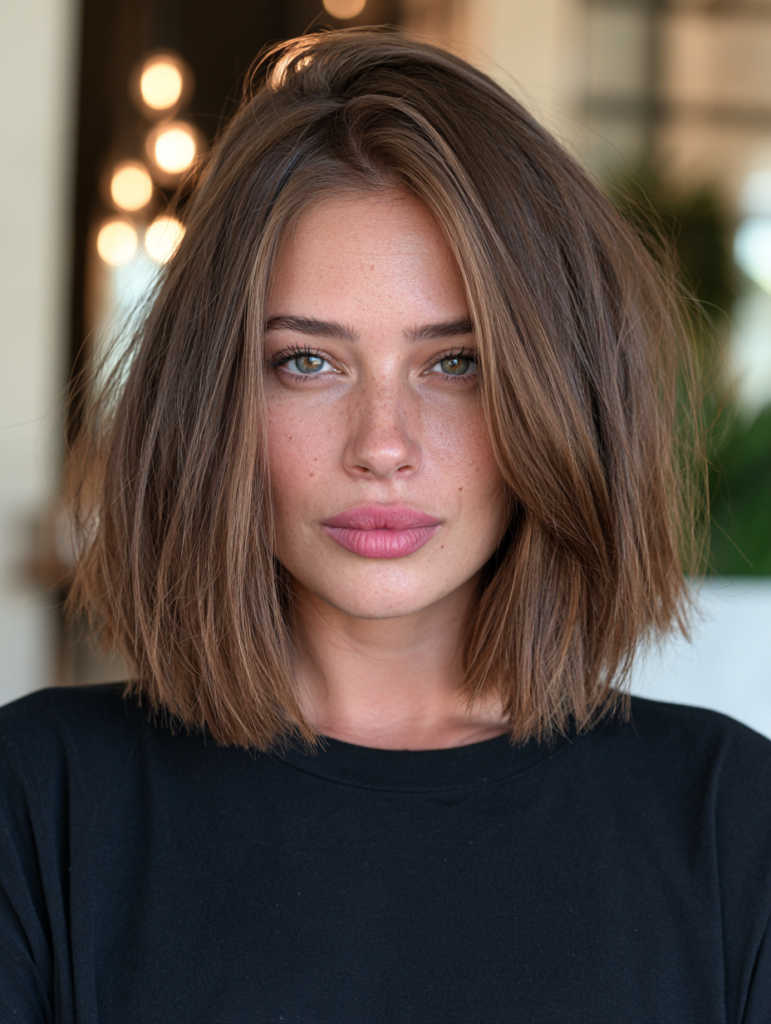
Minimal layering keeps the ends substantial and prevents delicate strands from becoming overly feathered. Blow-dry the roots upward before smoothing the lengths toward the jaw. A slight forward angle emphasizes definition, resulting in a polished hairstyle with naturally fuller-looking structure.
Long Bob With Face-Framing Layers
A long bob provides enough length to establish vertical movement, while restrained face-framing layers prevent thin hair from appearing heavy. Beginning those layers below the cheekbones keeps fullness away from the widest facial area and guides attention toward the lower lengths.
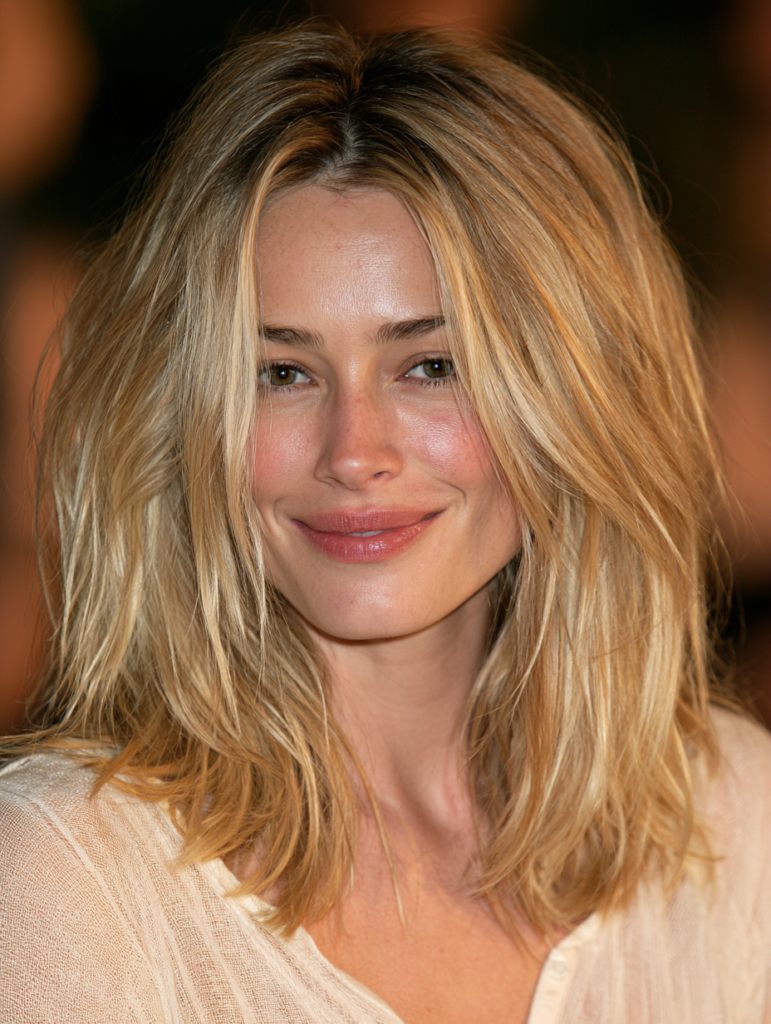
Preserve a relatively blunt perimeter so the ends continue looking substantial despite the additional movement. Gentle bends through the front pieces can emphasize their shape beautifully. This versatile lob works particularly well when you prefer longer hair without sacrificing the polished structure of a bob.
Textured Bob With Side Bangs
Light texture can give thin hair noticeable dimension, while side bangs introduce a diagonal line that complements round facial proportions. Keeping the fringe relatively airy prevents too much density from being removed from the remaining sections of the haircut.
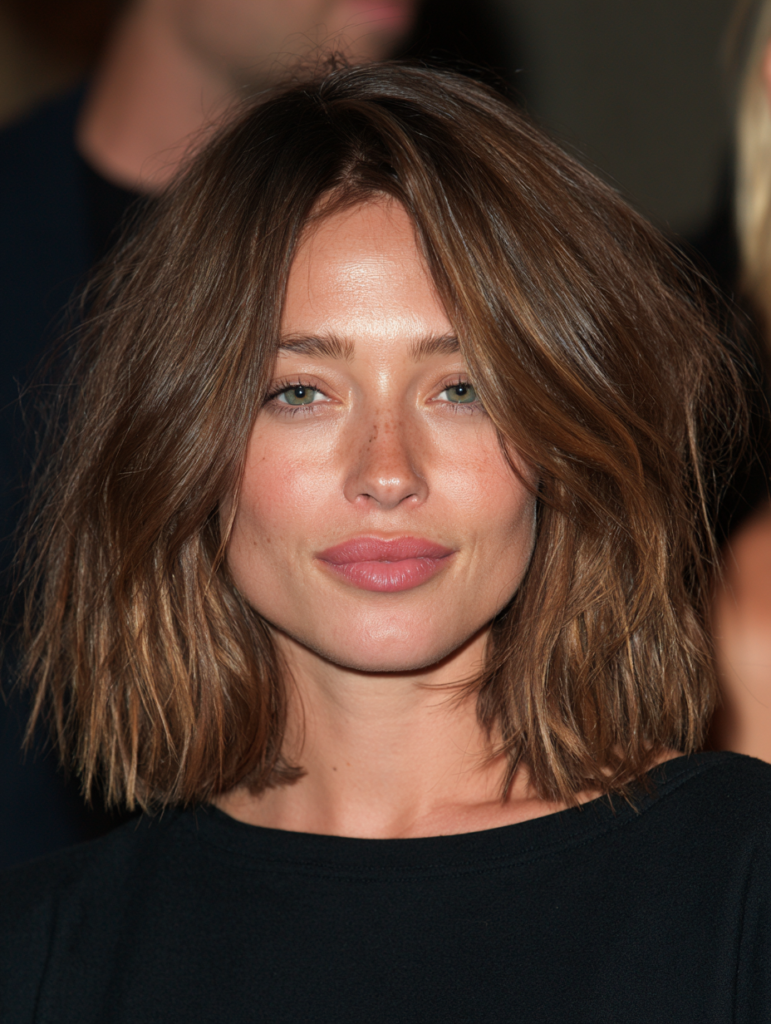
Avoid aggressive layering throughout the ends because thin hair benefits from maintaining a stronger perimeter. Instead, create subtle bends through selected pieces using lightweight mousse or texturizing spray. Sweep the bangs gently sideways, producing natural movement while preserving the bob’s fuller, intentionally shaped appearance.
Graduated Bob With Crown Lift
Subtle graduation through the back creates controlled crown volume without adding excessive fullness directly beside the cheeks. Longer front sections preserve valuable density and provide vertical framing, making this structured bob particularly suitable for thin hair and round facial proportions.
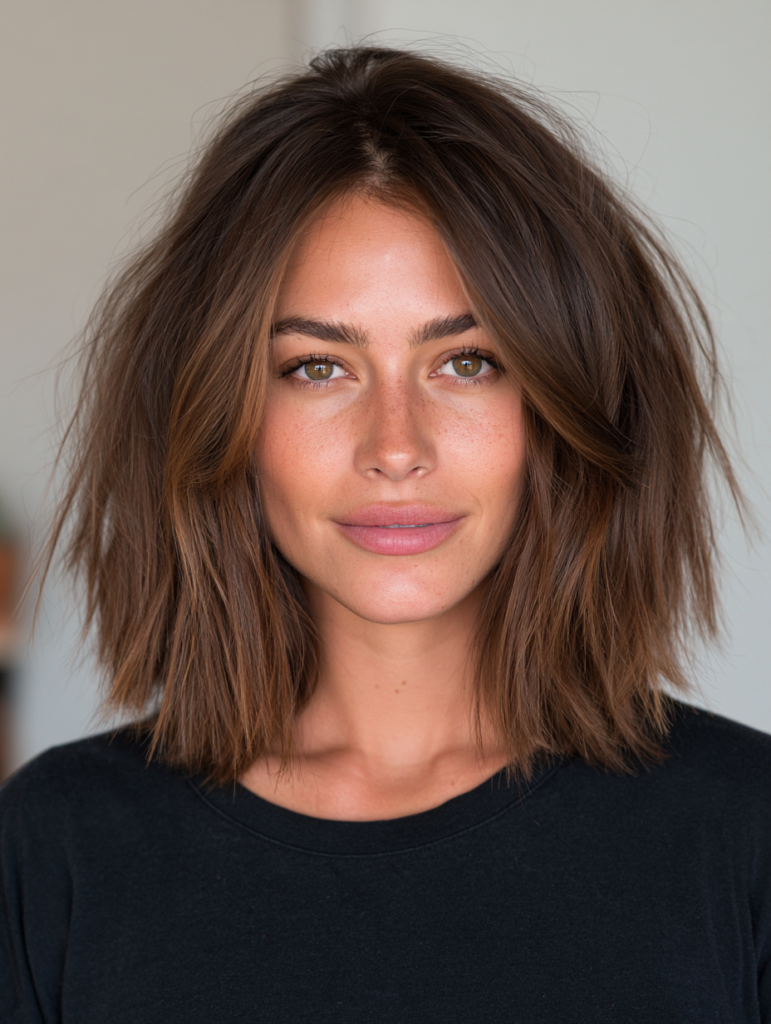
Keep the graduation moderate because excessive stacking can make delicate ends appear sparse. Blow-dry the crown upward using a small round brush, then smooth the front sections downward. This distribution creates attractive lift where needed while maintaining an elegant, balanced silhouette throughout the haircut.
Sleek Off-Center Bob
An off-center part introduces subtle asymmetry into a sleek bob, preventing the smooth hairstyle from appearing overly symmetrical around a round face. Keeping the length below the chin creates vertical emphasis, while a solid perimeter makes thin ends appear noticeably denser.
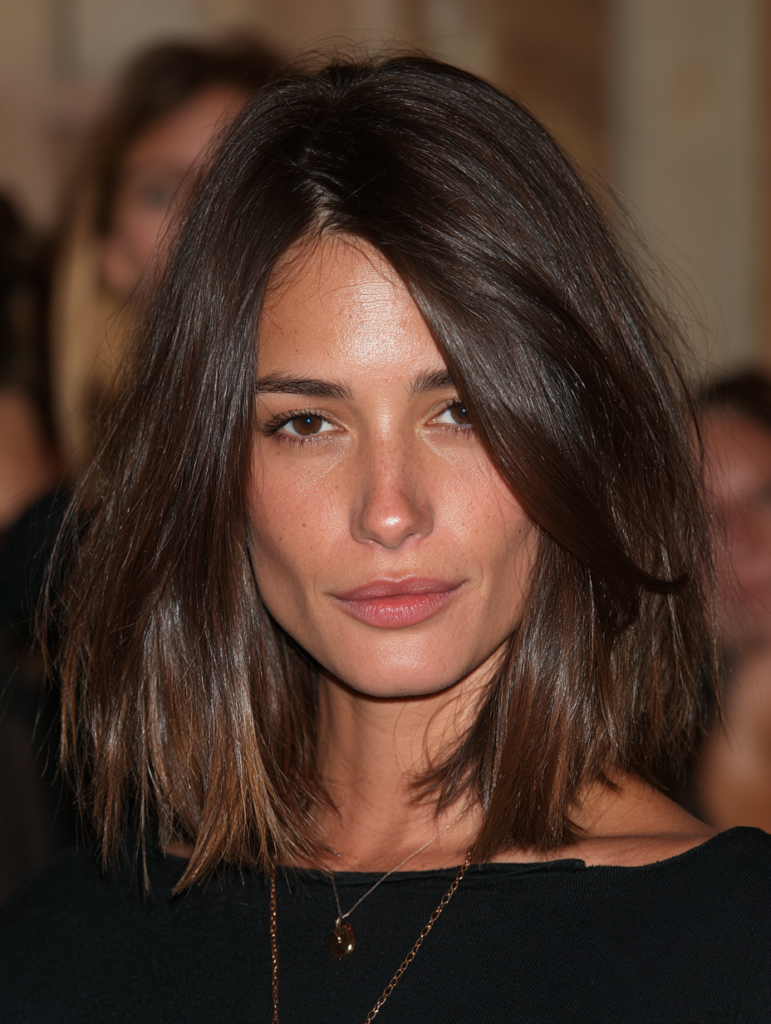
Even with a polished finish, avoid pressing the roots completely flat against the scalp. Gentle root lift provides enough dimension to keep the hairstyle lively. Smooth the remaining lengths downward and slightly inward, creating clean movement without introducing unnecessary width through the cheek area.
Wavy Lob With Blunt Ends
A wavy lob combines longer proportions with gentle texture, creating dimension while maintaining enough length to frame round features vertically. Blunt ends preserve valuable density, ensuring thin strands appear substantial instead of becoming increasingly wispy toward the perimeter.
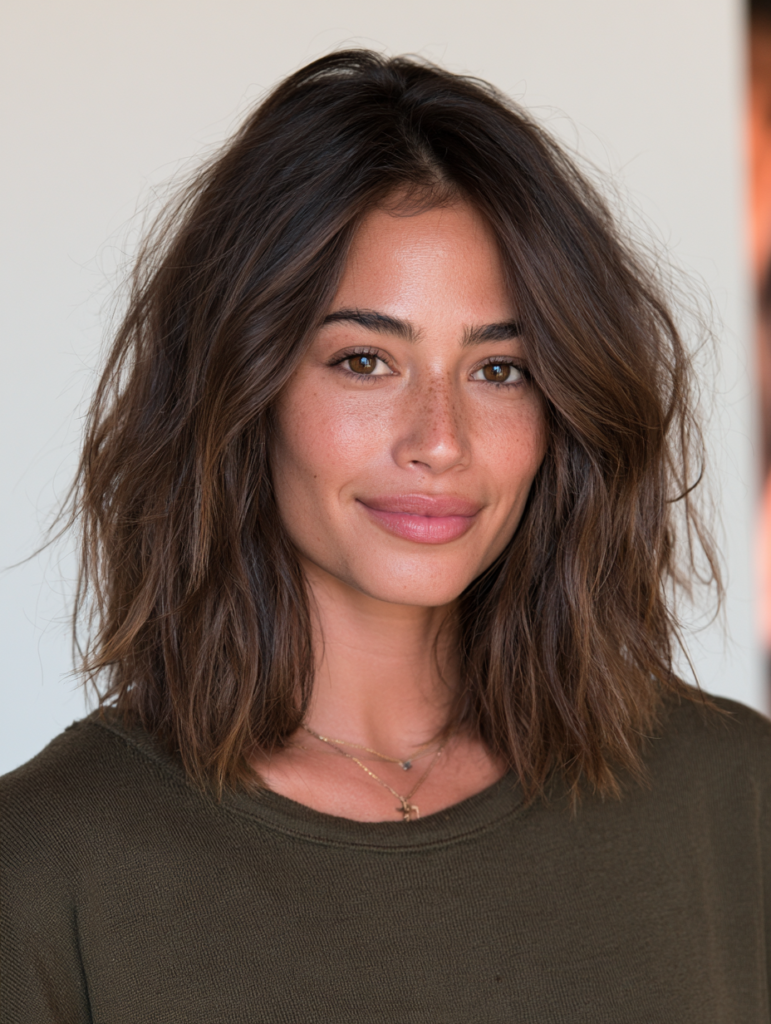
Begin loose bends below the cheekbones rather than creating significant volume beside them. Alternate their direction for a relaxed finish, leaving the ends slightly straighter to emphasize thickness. Lightweight styling mousse provides flexible hold while keeping the waves soft, touchable, and naturally full-looking throughout the day.
Asymmetrical Bob
An asymmetrical bob creates directional interest by keeping one front section deliberately longer than the opposite side. This uneven silhouette introduces diagonal and vertical lines around a round face while allowing the perimeter to remain strong enough for thin hair.
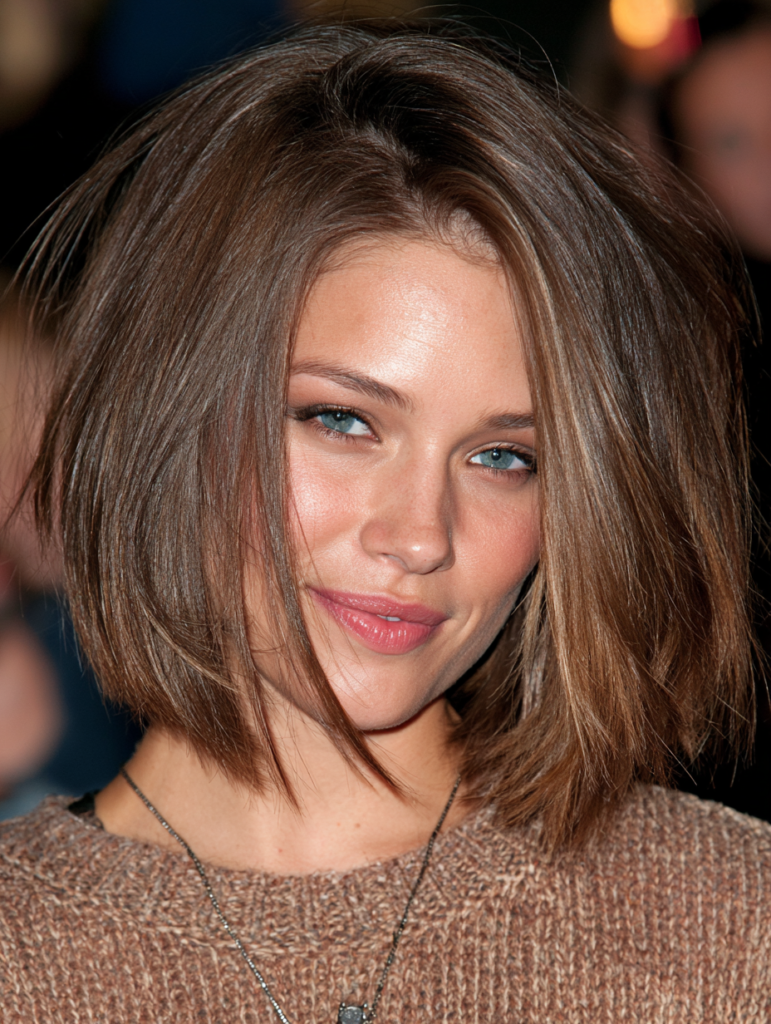
Minimal layering helps preserve density and emphasizes the haircut’s architectural shape. Wear it smooth when you want the asymmetry clearly defined, or introduce subtle bends for additional dimension. Either approach creates personality without depending on excessive volume or complicated styling techniques to make delicate strands appear fuller.
Inverted Bob With Soft Graduation
An inverted bob gradually transitions from shorter back sections into longer pieces approaching the face. Soft graduation creates gentle crown lift, while the elongated front maintains flattering vertical movement and prevents unnecessary width around round facial features.

Keeping the layers subtle protects the density thin hair needs through its lower sections. Apply root-lifting mousse before blow-drying the back upward, then direct the longer pieces smoothly downward. This controlled styling emphasizes the distinctive angle while maintaining a polished, substantial appearance throughout the perimeter.
Blunt Lob With Deep Side Part
A blunt lob combines a solid lower edge with additional length, creating a substantial silhouette that works beautifully for thin strands. Adding a deep side part provides instant root lift and asymmetry, helping the hairstyle complement round facial proportions without requiring complicated layers.
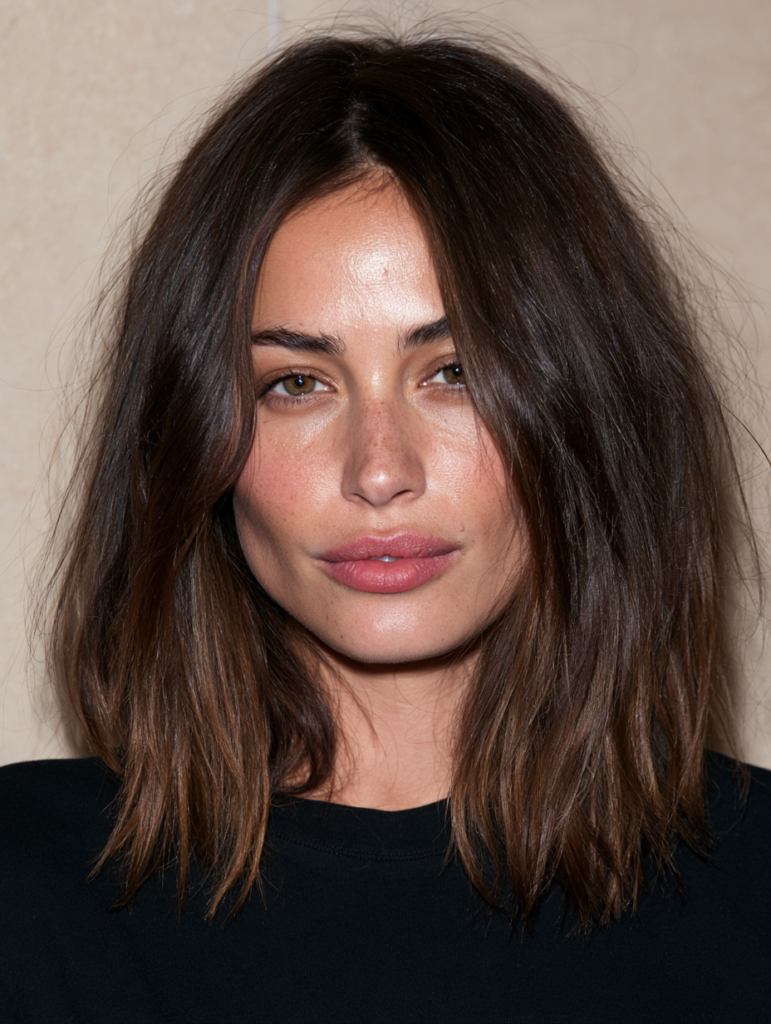
Keep the ends relatively straight to emphasize their density while allowing the front section to sweep diagonally across the forehead. A lightweight root spray can provide additional elevation without stiffness. The finished hairstyle feels sophisticated, modern, and remarkably straightforward to maintain between salon appointments.
Layered Bob With Long Side Fringe
Long side fringe creates graceful diagonal movement across the forehead while blending naturally into a lightly layered bob. Keeping those layers restrained prevents thin strands from losing valuable density, while longer front sections help create definition around a round face.
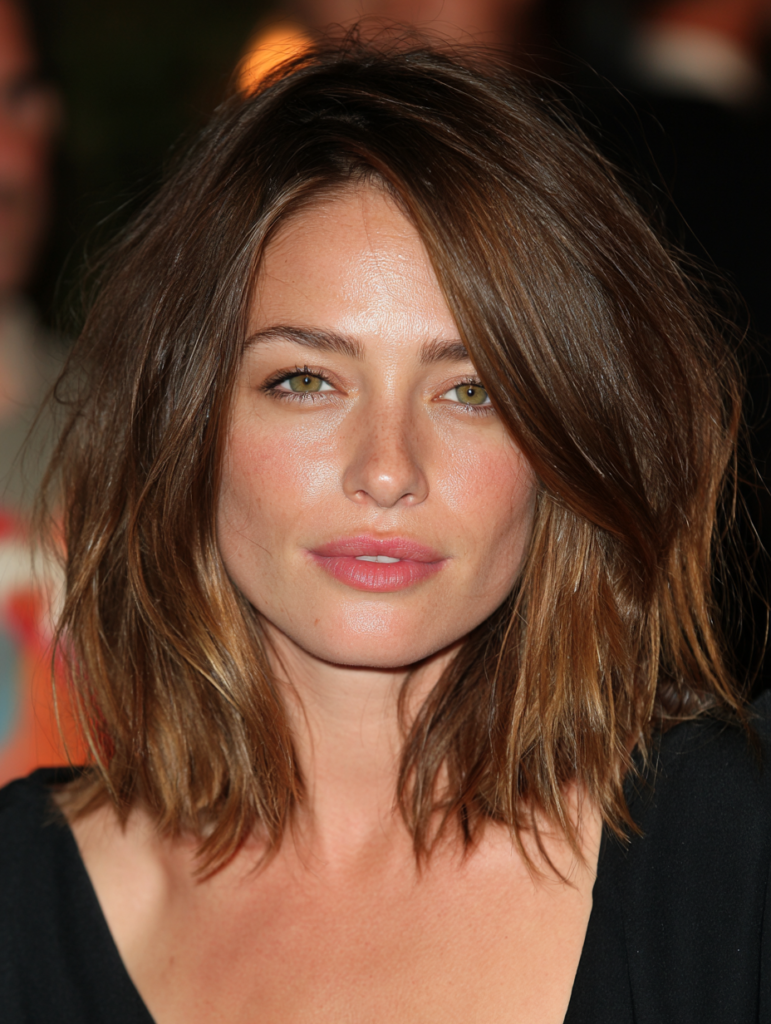
Concentrate subtle layering near the crown for lift rather than heavily feathering the perimeter. Blow-dry the fringe sideways and allow it to merge softly into the remaining lengths. This approach provides movement, gentle volume, and face-framing interest without making the overall hairstyle appear excessively light or sparse.
Shoulder-Grazing Bob
A shoulder-grazing bob provides enough length to create vertical framing while remaining short enough to prevent thin strands from becoming heavily weighed down. A strong perimeter maintains visual density, while subtle front shaping introduces movement around round facial proportions.
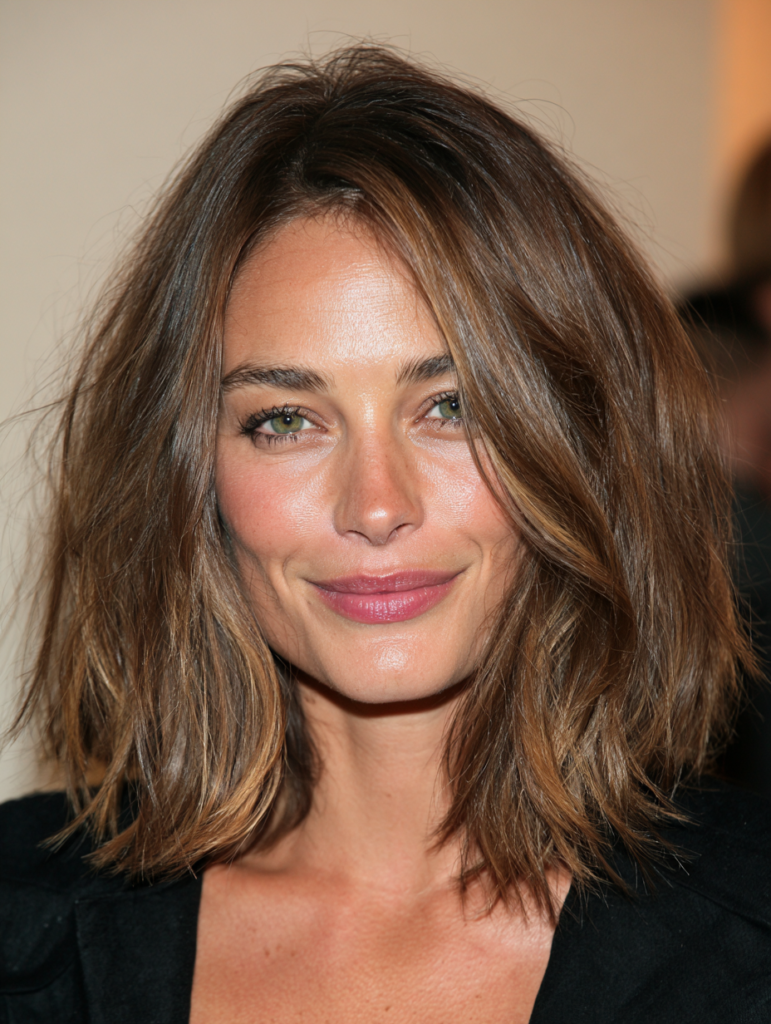
An off-center part can add gentle asymmetry and encourage useful root lift without removing additional hair through layering. Keep styling relatively smooth or create soft bends below the cheeks for dimension. This adaptable length also provides flexibility for simple updos while preserving the recognizable elegance of a longer bob.
How to Style Bob Haircuts for Thin Hair Round Face Shapes
Begin with lightweight volumizing mousse or root spray, concentrating the product around the scalp rather than saturating delicate lengths. Blow-dry the crown upward for controlled lift while keeping volume beside the cheeks relatively restrained. Side and off-center parts can also create natural elevation while introducing flattering asymmetry without requiring additional layers.
For textured bobs, create loose bends below the cheekbone area and leave some ends straighter to preserve visible density. Sleek styles should maintain gentle root lift rather than becoming completely flat. Avoid excessive oils, heavy creams, and aggressive thinning because these can make naturally delicate strands appear less substantial.
Final Thoughts
Bob haircuts for thin hair round face shapes can successfully combine fuller-looking density with balanced proportions. Strong perimeters help delicate ends appear substantial, while angled fronts, strategic partings, and subtle crown volume create movement without concentrating unnecessary fullness around the cheeks. Small structural details often make the biggest difference.
Choose a bob according to your natural density, texture, and realistic styling routine. Whether you prefer sleek precision, gentle waves, or relaxed texture, preserving enough weight through the perimeter remains essential. A thoughtfully customized bob can make thin hair feel fresh, dimensional, manageable, and beautifully shaped.
