Low maintenance hairstyles for thick hair should make natural density easier to manage without requiring long styling sessions every morning. Thick hair already offers fullness and body, so the right haircut focuses on distributing weight, controlling bulk, and encouraging natural movement. Strategic internal layers, practical lengths, and well-shaped perimeters can help the hair settle attractively with minimal intervention.
Whether your thick hair is straight, wavy, curly, or somewhere between, simplicity starts with choosing a cut that complements its natural behavior. These 13 hairstyles combine manageable structure with relaxed texture, giving thick hair enough freedom to move while reducing unnecessary styling work.
Why Effortless Cuts Continue to Make Sense for Thick Hair
Low maintenance hairstyles have lasting appeal because they rely on strong haircutting rather than daily manipulation. Thoughtful layering removes unnecessary internal weight, manageable lengths simplify washing and drying, and natural texture can become part of the finished appearance instead of something that needs constant correction.
Their flexibility also keeps these hairstyles relevant as trends change. A layered bob can remain smooth or tousled, while longer cuts can transition between loose hair, ponytails, and simple updos. These adaptable shapes make thick hair easier to live with while preserving its naturally substantial character.
Blunt Shoulder-Length Cut
A blunt shoulder-length cut offers a clean silhouette while keeping thick hair at a practical length for everyday maintenance. Subtle internal weight removal can prevent excessive bulk without disturbing the strong perimeter that gives this hairstyle its polished character.
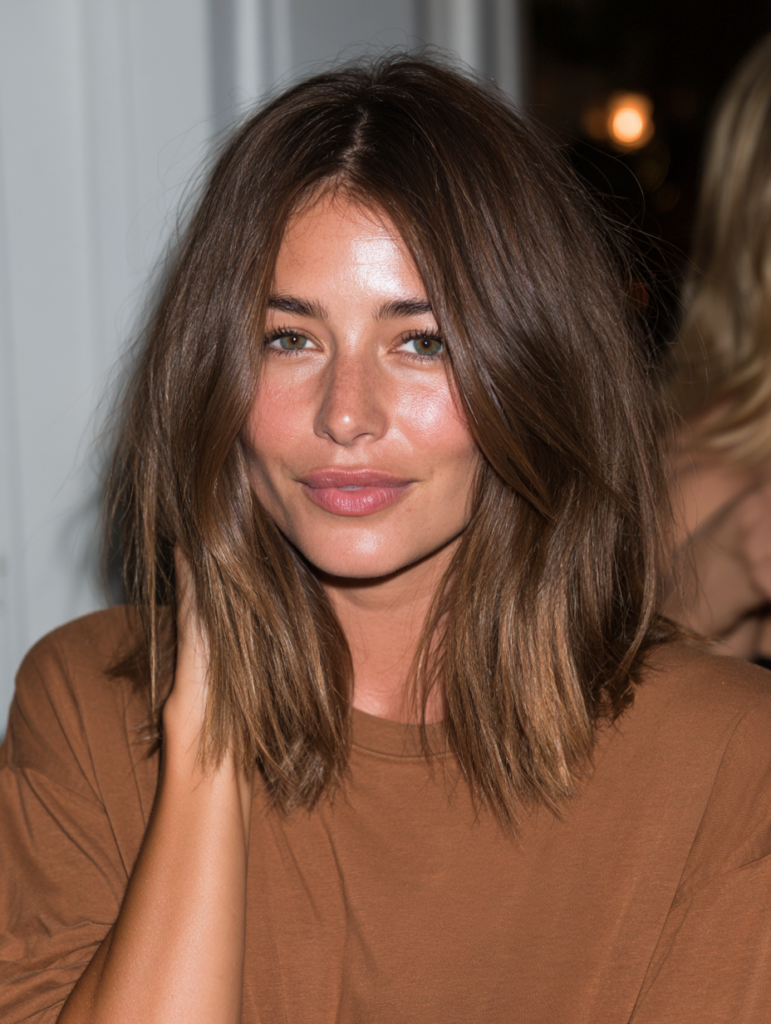
For easy styling, apply lightweight leave-in conditioner before air-drying or rough-drying the hair until nearly finished. A quick pass with a round brush through the ends can create additional smoothness when desired. The straightforward shape also works beautifully for ponytails, buns, clips, and simple half-up arrangements.
Soft Layered Bob
A softly layered bob controls thick hair through restrained internal shaping rather than dramatic graduation. Longer layers remove heaviness while allowing the exterior to remain smooth, substantial, and easy to manage between regular salon appointments.
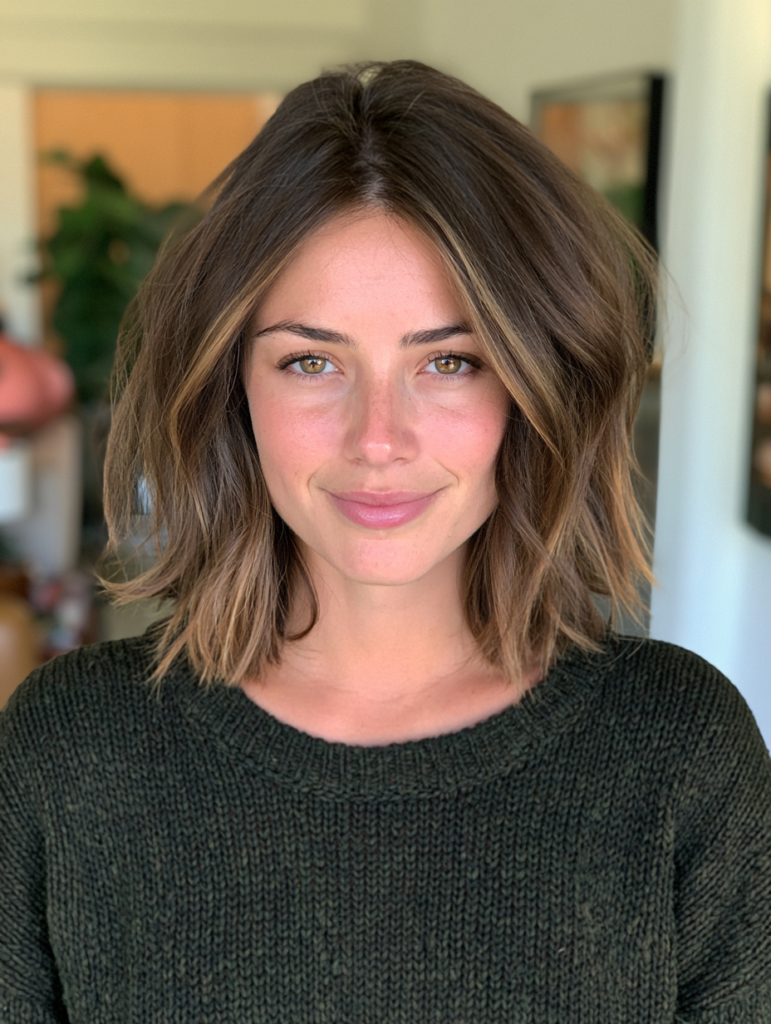
Choose a length around or below the jaw if you want enough weight to prevent excessive expansion. Apply smoothing cream to damp hair, then air-dry or blow-dry using your fingers before refining only the front sections. This uncomplicated routine keeps the bob movable and polished without requiring every layer to be individually styled.
Wavy Collarbone Lob
A collarbone lob works especially well when thick hair already has natural waves because the length provides enough weight to control expansion. Subtle internal layers help individual bends move freely without producing an overly bulky or triangular silhouette.
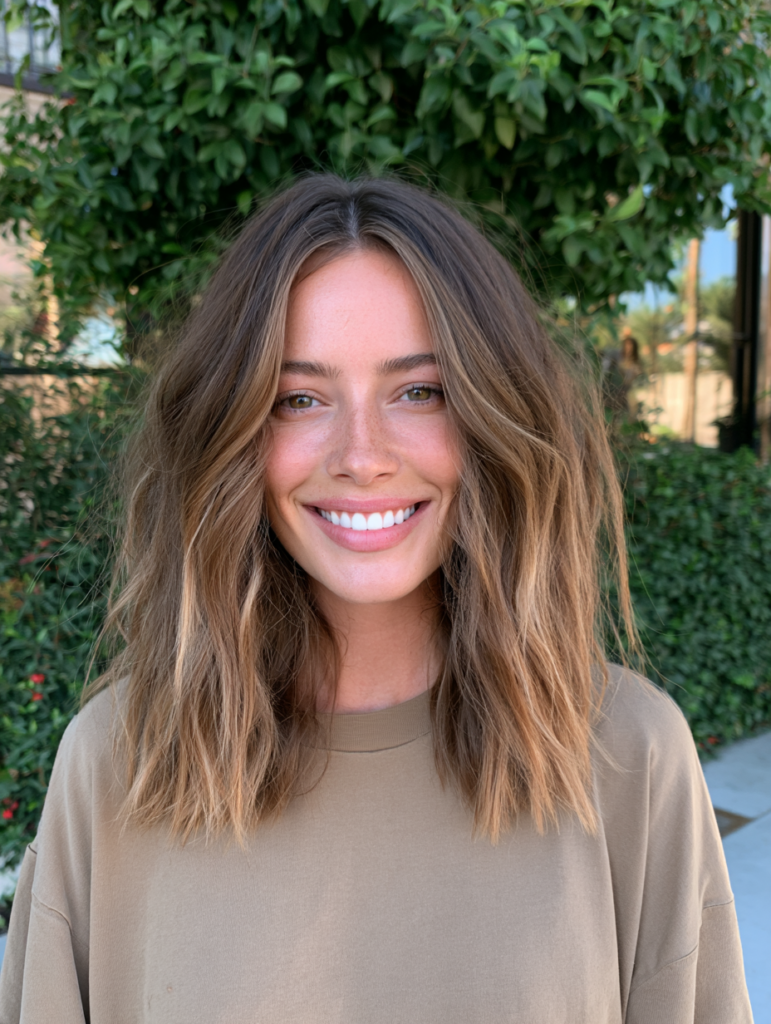
Apply lightweight wave cream to damp hair, scrunch gently, and allow the natural pattern to develop through air-drying or diffusing. Once completely dry, separate only selected sections where additional movement is needed. Working with the existing texture eliminates unnecessary straightening while creating an effortless, dimensional finish suitable for everyday wear.
Long Hair With Invisible Layers
Invisible layers remove internal weight from long thick hair without creating dramatically separated sections throughout the exterior. This technique preserves the appearance of substantial length while helping dense strands move more freely and dry with less heaviness.
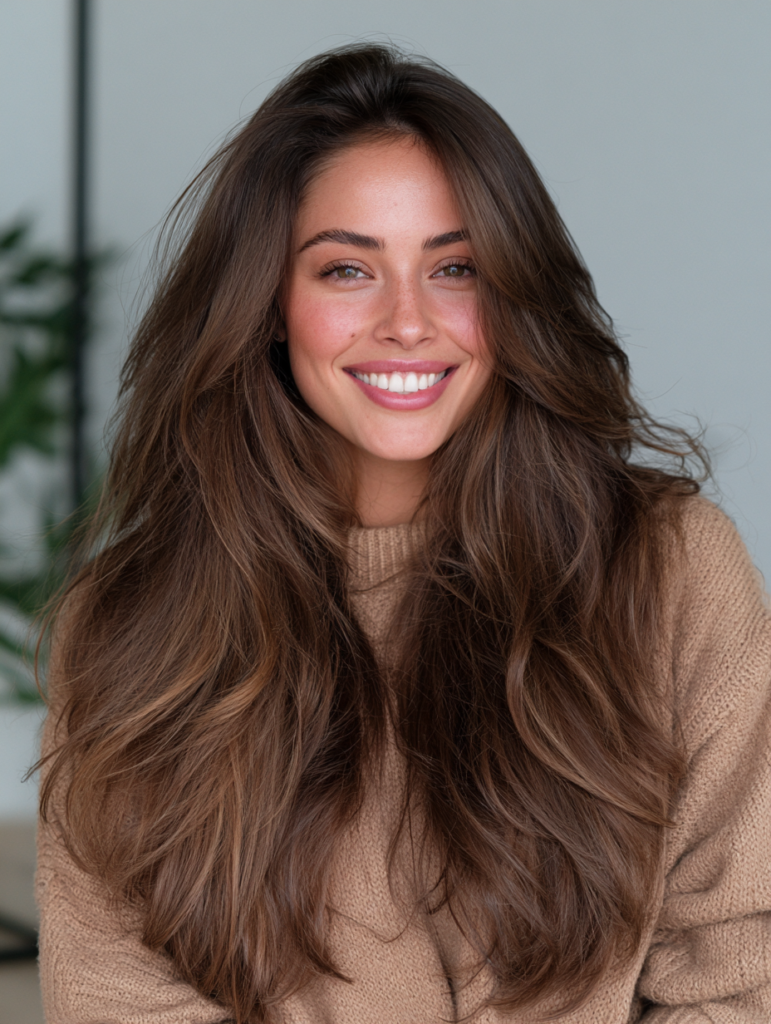
Keep the outer perimeter relatively strong so the hairstyle remains easy to gather into ponytails, braids, and buns. Apply leave-in conditioner through damp lengths, then air-dry whenever practical. Because the layering remains subtle, the hairstyle does not depend on elaborate blowouts to reveal its shape, making daily maintenance considerably simpler.
Rounded Bob With Minimal Layers
A rounded bob uses gentle curvature and limited layering to create a controlled shape without requiring extensive everyday styling. Strategic internal weight removal prevents thick hair from becoming excessively bulky while preserving enough density for a smooth, substantial perimeter.
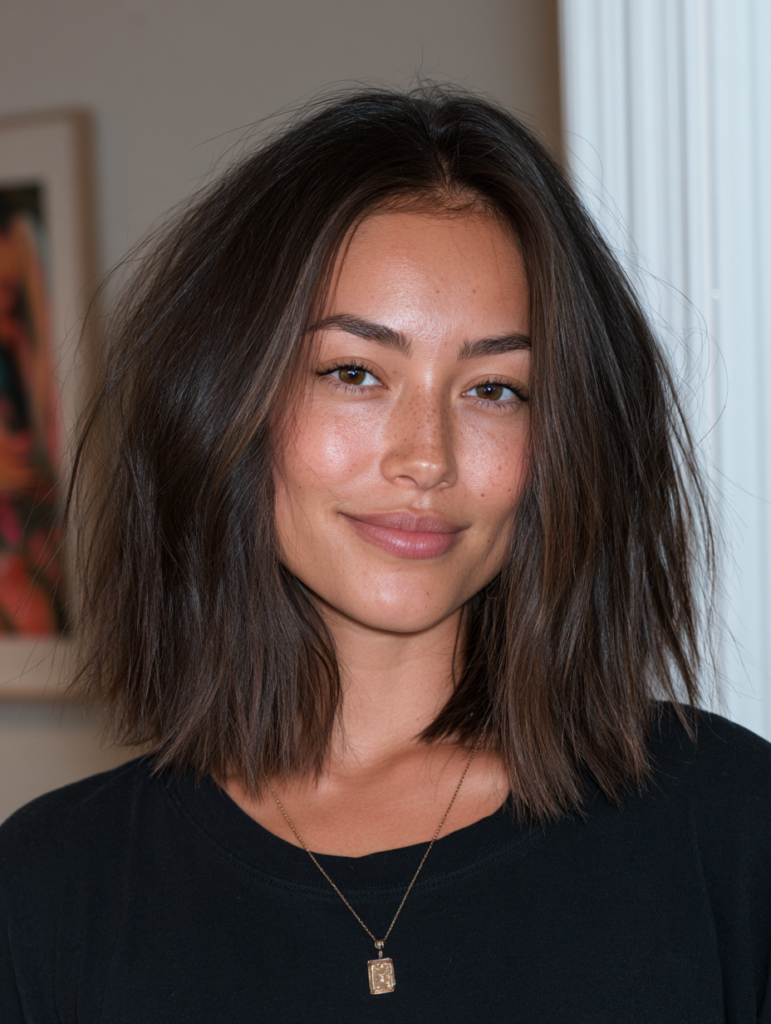
Ask for a length that allows your natural texture to settle comfortably rather than springing outward unexpectedly. Blow-dry with your fingers until nearly dry, then use a round brush briefly around the front and ends. The haircut’s built-in curvature handles most of the shaping, reducing the need for complicated styling.
Modern Shag With Long Layers
A modern shag can simplify thick hair when its layers remain long enough to prevent excessive puffiness or unpredictable volume. Strategic crown and face-framing sections distribute density while encouraging natural movement throughout the remaining lengths.
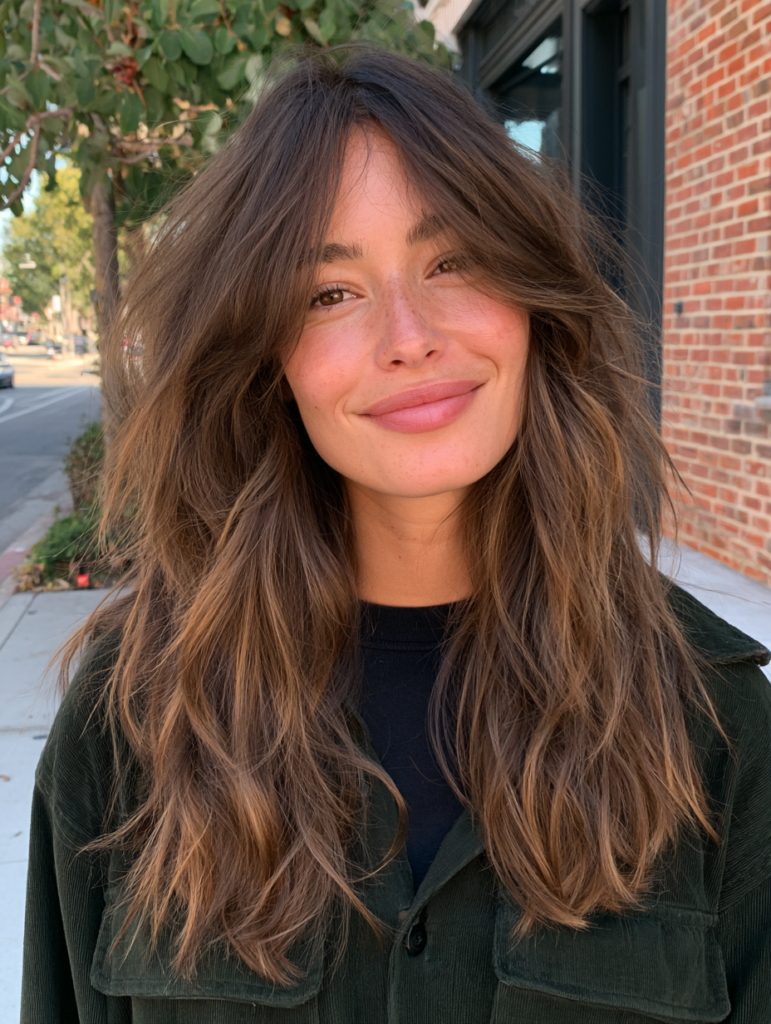
This haircut works particularly well with naturally wavy or slightly textured hair because imperfect movement complements its relaxed character. Apply lightweight mousse or texture cream, then scrunch and air-dry instead of creating a polished blowout. The finished shape looks intentional even when individual sections fall differently from one day to another.
Tapered Pixie With Long Top
A tapered pixie removes considerable bulk around the neckline and sides while keeping additional length through the crown. This distribution makes thick hair quicker to wash and dry while preserving enough texture for several easy styling possibilities.
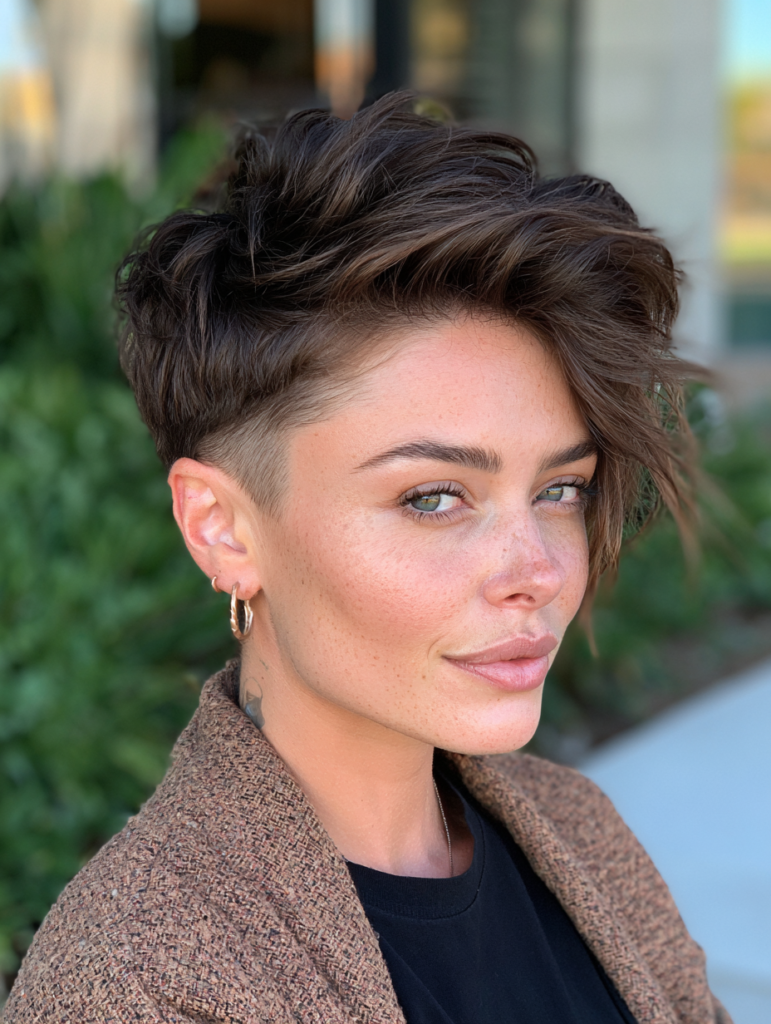
Apply lightweight styling cream through the longer upper section, then finger-dry it backward, sideways, or slightly upward depending on your preferred finish. The tapered areas require little daily attention beyond occasional smoothing. Regular trims maintain the shape, but everyday styling can remain remarkably quick once the haircut is properly structured.
Curly Layered Bob
A curly layered bob uses strategic shaping to distribute the natural volume of thick curls rather than forcing them into a uniform silhouette. Properly positioned layers prevent excessive weight at the bottom while giving individual curls enough room to form naturally.

Apply moisturizing curl cream to damp hair, then air-dry or diffuse with minimal handling. Avoid brushing once the curls begin drying because this can create unnecessary expansion and disrupt definition. When fully dry, lift selected roots gently for shape, allowing the haircut and natural curl pattern to handle most daily styling.
Face-Framing Mid-Length Cut
A mid-length cut with face-framing layers keeps thick hair versatile while introducing movement where it creates the greatest visual impact. Longer sections through the back maintain enough weight for manageable styling, while shorter front pieces prevent the overall shape from feeling excessively heavy.
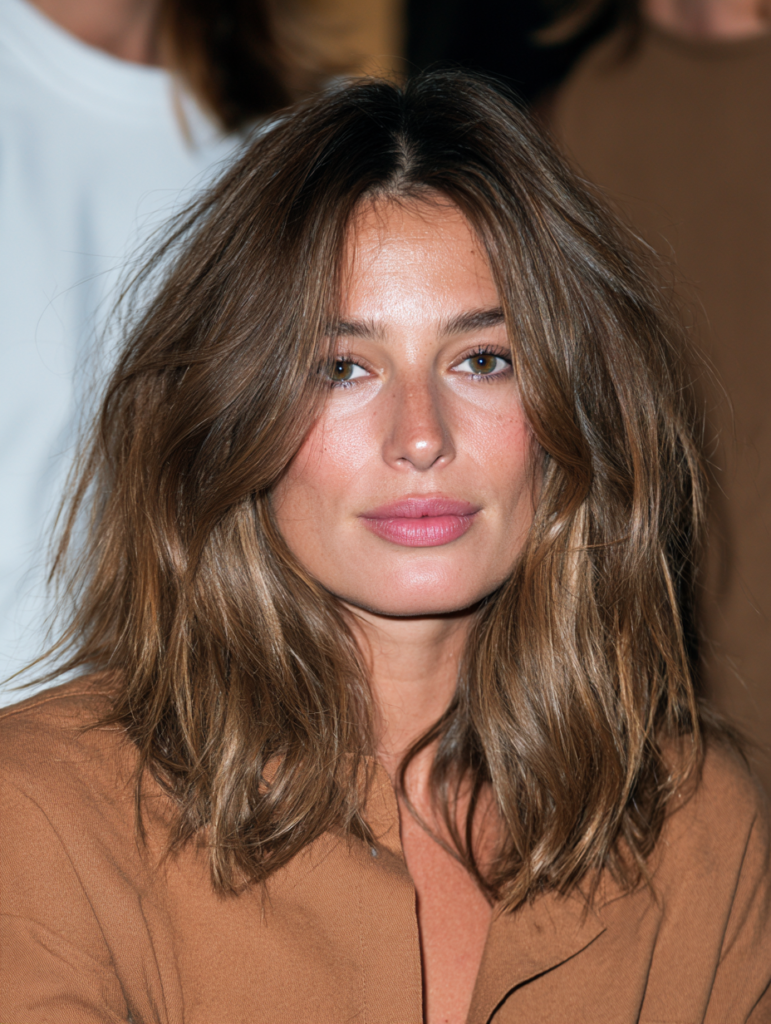
Direct the face-framing sections away from the cheeks while blow-drying, then allow the remaining lengths to follow their natural texture. On busy mornings, the hair can easily be gathered into a ponytail or bun while leaving several front pieces loose for softness and movement.
Tousled Jaw-Length Bob
A jaw-length bob removes considerable length from thick hair while subtle internal layering prevents the compact shape from becoming excessively wide. Tousled texture makes this haircut especially forgiving because it does not depend on perfectly smooth sections or precise daily styling.
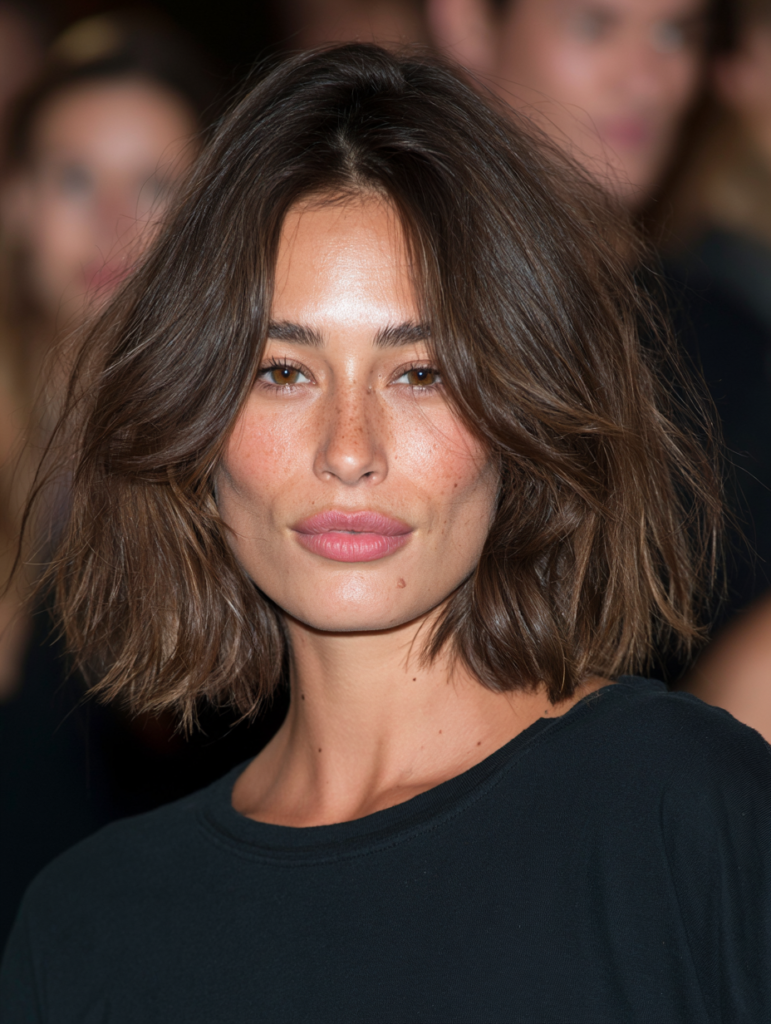
Apply lightweight mousse to damp hair, then scrunch or finger-dry while encouraging natural movement. If your texture needs additional definition, create only a few loose bends through selected sections. Slight irregularity enhances the hairstyle rather than diminishing it, making the bob particularly practical for relaxed routines.
One-Length Long Bob
A one-length long bob provides a strong, straightforward shape that works especially well when thick hair benefits from its natural weight. The minimal layering reduces complicated styling requirements, while the longer length prevents dense strands from expanding too dramatically around the sides.
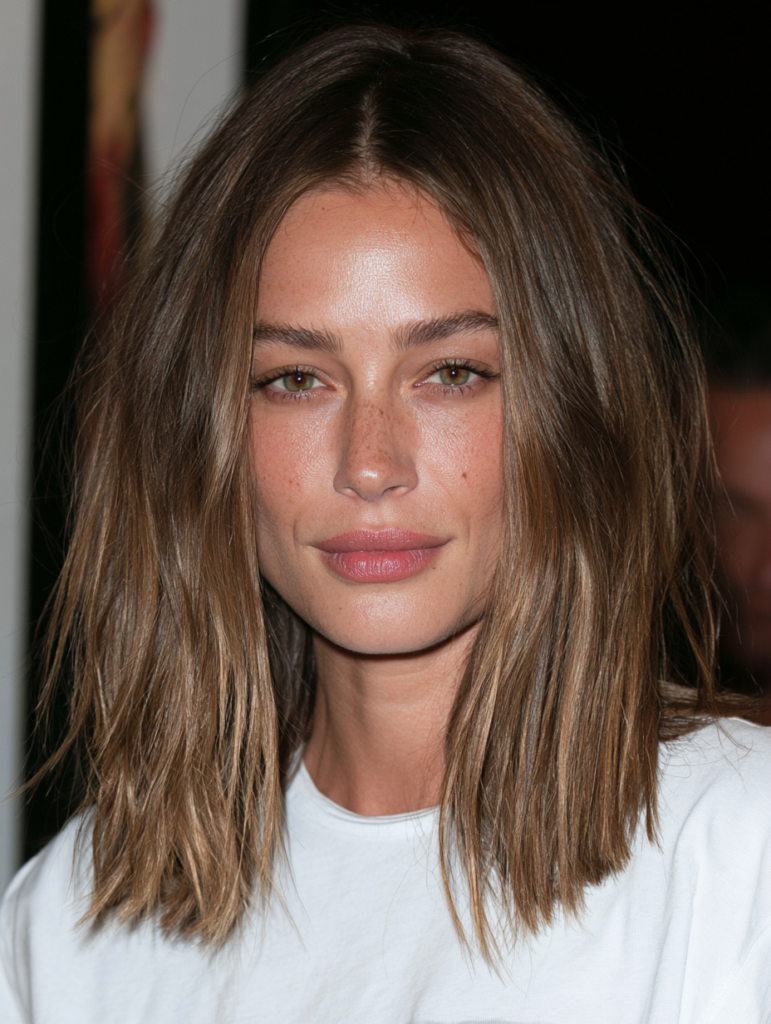
Ask for discreet internal weight removal if your density creates excessive bulk beneath the surface. Apply smoothing leave-in product after washing, then air-dry or rough-dry according to your texture. A center or side part can instantly change the finish without requiring additional cutting, curling, or elaborate styling.
Simple Styling Routine for Low Maintenance Thick Hair
Start by choosing products according to texture rather than applying multiple formulas simply to control density. A lightweight leave-in conditioner can improve manageability, while smoothing cream works well for straighter textures. Wavy and curly hair often benefits from moisture and definition products that encourage the existing pattern instead of fighting it.
Whenever possible, allow the haircut to provide most of the structure. Air-drying, finger styling, loose bends, and simple accessories can reduce daily effort considerably. Regular trims are also valuable because maintaining intentional layers and removing damaged ends prevents thick hair from becoming unnecessarily bulky or difficult to control.
Final Thoughts
Low maintenance hairstyles for thick hair work best when they distribute density while respecting natural texture. Long internal layers can reduce heaviness, bobs provide manageable structure, and tapered pixies remove bulk where it becomes difficult to control. The goal is creating a haircut that still looks intentional without demanding constant attention.
Consider how your hair behaves when left mostly alone before selecting your next style. A haircut designed around that natural movement can simplify washing, drying, and everyday styling while allowing the fullness of thick hair to remain one of its greatest strengths.
